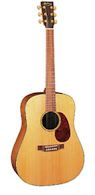
 Dr. M. during the second set of a performance with the Church Street Ramblers at a charity event. Guitar: Martin SWDGT, a D-18GT Sustainable Series. Cotton pleated skirt by Club Monaco, 5th Ave., NYC
Not all microphones are created equal. That is why when I perform, I prefer to bring my own rig and not use the house mics. I also use mic preamps to smooth out peaks and valleys in the signal while adding a bit of compression and reverb. All of these elements make for a polished performance and confidence on stage.
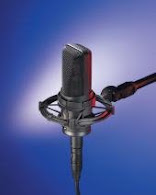
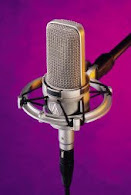
Most venues still use dynamic mics. They may have gone wireless but they are still dynamic and in my opinion muddy as compared to the condensers I use in the studio and on tour. I learned early on to bring the best gear to recapture that "studio sound". Using Audio-Technica's ATM710 condenser mic with my DigiTech Vocalist Live 2 and Vocalist Live 4 immediately brought the professional sound I was looking and listening for to my live performances. There is no reason to be afraid of condensers any more if you use the right ones and place them away from the speakers. Now if your style consists of screaming into the mic well, a condenser might not be for you. However if you wish to pick up subtle nuances in your vocals and instrumentals...get a good condenser!
How you prepare for your concerts will certainly effect the finished product, that is your on stage appearance. Getting your sound stage under control starts in the studio. This is where you begin to try out different microphones to see how they work and respond. You can also try wireless applications in the studio first before taking them on the road. We tried a Fender wireless system which was made for one of their PA systems. It came with a dynamic headset mic which was adequate but nothing to write home about. Even worse, it could only be used with that particular Fender amp. We went back to Audio-Technica and found that they had a condenser wireless system utilising the same ATM710 mic that we were so impressed with as a cabled mic! Now we were on to something as Audio-Technica's Series 3000 Wireless System was very easy to set up and unlike the Fender, did not require a trans pack. A battery within the mic housing provides the phantom power needed. The results were pretty incredible. Sparkling clarity and transparency on vocals and everything else you want to throw at it. Nearly feedback proof, it has an easy to access mute button and UHF offering multiple channels.
Mic preamps are a must for recording in the studio but also have a place on the road. Many come as rack mounts but I prefer to travel light. Moreover foot pedals allow me to make adjustments for my vocals and guitar with out having to turn my back to the audience to do so. While I really enjoy using my BOSS GT-10 guitar multi-effector for recording, it's just overkill for most venues. The DigiTech RP-90 is a good alternative for my electric guitar or I'll pack a smaller harmonizer such as the Vocalist Live 2 (VL2) or the Electro Harmonix Voice Box + Vocoder. These preamps or signal processors help to even out your vocals and give you great harmonies by tracking your guitar chords. In the studio, I use the Vocalist Live 4 with pitch correction and many more tweakable features I want on my recordings. Same thing with the GT-10 which has nearly 400 presets for clean and dirty guitar. I also use the far more sensitive Audio-Technica AT4047/SV condenser with the Vocalist Live 4 and the T.C. Helicon VoiceTone Harmony G with the Audio-Technica AT4050 multi pattern condenser. This sort of effort truly pays off when you play back your newly burned CD's. Likewise a poor quality mic can fail to capture your spontaneous creativity.
So what does my road rig look like? A lot like my recording studio! Depending on the size of the venue, it can be a very simple set up with my instrument, condenser mics, signal processor and drum and bass machine. I use the BOSS Dr. Rhythm boxes both live and on recordings and have been very pleased with their easy operation and results. In fact, I got the Instructional DVD for the BOSS DR880 which shows basic and more advanced programming. Really my road rig mirrors my studio rig with the exception of the digital recording equipment. I've also found that there are high-low alternatives. Take for example, if you can not afford the VL4, consider the VL2 or the Voice Box which will still give you basic harmonies and a great finish on your vocals at about half the price. Sometimes it is wiser to leave your more fragile and expensive studio boxes in the studio. I would include the VL4 in that category. I've taken on the road but always used a padded flight case. Plastic knobs and pedals often do not fare well roadwise. All metal chasis and foot switches tend to hold up much better. Once you practice with quality gear you will want to showcase this level of precision for live performances. So here are My Studio and Road Rig Picks!
See more essential gear from my private studio and road set up in the left hand column with some great deals PLUS FREE shipping to boot! Coming Up Soon..... our Best Guitar Gear for 2010 hit list and our Top Gear for Audiophiles. Check this out before you do any gift shopping!




















 Posts
Posts

