Showing posts with label Keeley Electronics. Show all posts

Friday, November 21, 2008

Best Guitar Gear for 2009 - Guitar & Pedal Cables


Dr. M's Fender Strat getting the Snap Jack treatment!


The cables you choose can either enhance your guitar's tone or suck the life out of it. Another problem with poor quality guitar cables is they can actually add noise to your performance or even worse, your recording projects. We have sought out the best cables on the cutting edge of design, construction and innovation. The ones we have chosen both have a circuit breaking device on the tips which allows you to silently disconnect from your amp without running to turn it down or off. This feature alone saves time, steps and damage to your sound equipment. We have also separated them into two categories. The first cable we found was best for live performances and the second for recording. Since many of our guitar cables are also hooked up to our stompboxes, we included the best pedal cables as well. Here are the finalists:


Snap Jack Guitar Cable by ZZYZX for Live Performance

We have found this cable to be the best for live performances and concerts. This is because noise is not as much of an issue when you are onstage as it is in the recording studio. The Snap Jack Cable all is same is very quiet but not the most quiet cable that we tested. Where the Snap Jack does shine is its ability to completely cut off the signal upon disconnecting the neodymium magnetic two piece tip. I have disconnected from a live sound system in concert without having to wait for the sound man to come on stage. Using extra tips,(available in straight and right angle), I've also been able to switch instruments quietly, on the fly with absolutely no popping or squeals coming over the amp. I like the fact that it will disengage under a certain amount of pressure, therefore should you catch your foot on the cable, you're not likely to go for a nasty fall or damage your equipment. Visit Jodavi 's ZZYZX online store and see all the models of Snap Jack cables at: http://www.zzyzxsnapjack.com/


Spectraflex Fatsoflex Silent Plug for Recording

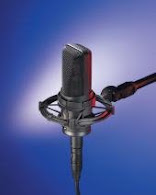
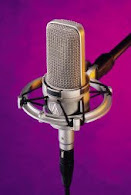
When we wanted to do studio recording, we had to look at a lot of factors. Ambient sound, mic placement and especially the type of studio mic to pick. Where a lot of us miss it, is the fact that having poorly shielded cables can add even more noise than many environmental sources. We did a guitar instrumental as our first demo CD recording. What we found was a great deal of buzzing or hum on the track. Nothing we did seemed to help until we switched all of our studio cables to Spectraflex. The difference was incredible. All you can hear now is the sound of the instruments, (a Fender Stratocaster and a Martin D-16GT). The Spectraflex Fatsoflex Silent Plug allows for instrument switching but this cable's forte is in their super thick, braided insulation design. We've not found any other cable that could match it for noiseless recording and replication of clear tone. We've even replaced our new Audio-Technica AT 4047/SV side address condenser mic cable with a Spectraflex Braided Low Z cable. When everything comes across crystal clear on the studio monitors, you know that's going to transfer to your recording as well. Visit Spectraflex online at: http://www.spectraflex.com/


A WORD ABOUT PEDAL CABLES

Using great guitar cables not only improve the quality of your tone but will carry over towards improving your pedal board's performance too. Some pedals do rob your guitar's tone but often times it is the type of cables you are using to connect from your guitar, to your pedals and then to your amp. A lot can get lost along the way, especially if you use a lot of individual pedals in a daisy chain of effects.
Personally I have always preferred the right angled pedal cables over those with straight tips although it is good to have a few of those onboard. Right angled tips allow more boxes to fit neatly on the pedal board. You'll appreciate this even more as your collection grows and you want to add some variety to your sound. Just as poorly shielded cables will add noise to your guitar's sound, the same is true for pedal cables. They should be of the same quality and insulation as what you plug into your guitar so here's our pick:

Spectraflex Braided Pedal Cables

Carrying over the same quality and shielding found in their braided guitar cables, Spectraflex does it all in style. I've used their braided guitar cables for years, (Spectraflex is the original braided cable, after all), and they are all still going strong. Their cloth braiding helps insulate from excess noise but also makes for a tougher, more durable cable. Not only that, the very cool colors and designs on the cables themselves can help you visually organize your pedal board. You can set up according to they type of effects, (modulation, compression, etc.), and use specific pedal cable colors to designate them. The quality is unsurpassed for connecting all of your stompboxes and even looping out an effect for your multi-effector like our BOSS GT-10 with Keeley's Compressor. Visit Spectraflex online to see their braided Fatsoflex and pedal cables: http://www.spectraflex.com/

The BOSS GT-10 in its custom Tarcase. Spectraflex pedal cables are used to loop in extra effects such as a Keeley Compressor.


Stick around for our continuing countdown of the Best Guitar Gear for 2009! If you are looking for that perfect Christmas gift for your favorite guitarist, (that could be you, actually), check out our reviews before you buy. You can also see our previous articles in this series, namely the first on the Best Guitar Gear for 2009 - Guitar Straps: http://mariejmiczak.blogspot.com/2008/11/best-guitar-gear-for-2009.html

Monday, September 22, 2008

BOSS GT-10 and DigiTech's RP-90

The BOSS GT-10 road-ready to rock!
Case by Tarcase Co., custom made in the USA

On the Floor...in Your Face!

One of the most outrageously fun things we've done this summer is check out the NEW BOSS GT-10 and DigiTech's RP Series of on-the-floor guitar multi-effectors. Having had experience with the BOSS DR-3 Drum & Bass Machine plus their BR1200CD Digital Recording Studio, this was an easy transition as the GT-10 is light-years more simple to use than any other BOSS gear I've worked with. The same goes for my owning DigiTech's VL2 and VL4 Vocalist Live line of signal processors. Kudos for both companies for making their units user-friendly without hauling out the phone book sized manuals BOSS is especially known for.

So how do these multi-effectors stack up, especially since in our last issue, we showed how to construct your own pedal board? I'll be honest. No multi-effector can replicate the tone and subtle nuances of your favorite pedal. On the up-side, these multi-effectors offer something of their own but you need to appreciate them for what they are and what they are not. First off, they are not boutique pedals. The Keeley Compressor and Fuzz Head boxes we tested are in a class all their own....really. You can even tweak the Keeleys for even more control over your individual sound. These are the originals upon which the analogs in the floor multi-effectors are based. In other words, manufacturers will try to approximate an electronic copy of the sound of your favorite effects pedals, cabinets, amps and pickups. They can get close but there's nothing like the real thing!

Well, what are you getting with a multi-effect unit like the GT-10 and the RP-90? Quite frankly, a lot. The GT-10 offers something like 198 presets with storage space for 400 of patches giving you everything from dirty to clean to weird with some effects I've never even heard of. One of the other students in my guitar class brought in his DigiTech RP-70, (a model below the RP-90), and it made his guitar sound like a pro-recording studio demo. The effects that he got from that little box were off-the-hook, incredible. Now while I really respect a tone snob's right to be picky, I think the floor multi-effectors have a place in a musician's arsenal of gig-tricks. For
example, you have an early morning radio show and want to
play live on the air with the station's DJ. Good enough but I know from experience that most radio station sound booths are very small. There's barely enough space for the broadcasting equipment, let alone you. If you think you are going to bring your full rig in to set up, think again! In this case the DigiTech RP-90, shown here to your right, would be perfect. It is very small but gives you 12 amp/cab models, 6 distortion models and 32 effects, 50 presets plus a drum machine. The sound quality of your multi-effector, like anything else is going to depend on your amp. We used a Behringer 45 watt amp, a Roland SA-300 Stage Amp, (350 watts) and a Crate GX-20M guitar amp, (20 watts) for a stereo mix. Therefore we had plenty of top and bottom end to allow them both to fully express themselves. I've done an instrumental recording with the GT-10 and it was as easy as plugging in the 1/4 jack cables into the back of the recorder. The results were impressive.

The GT-10 has the advantage of being a bit more box than the RP-90 but it is also cost about $400 dollars more! The GT-10 also has USB/MIDI capabilities, a parallel effects chain and a sound on sound 38 second phrase looper. I recently heard Phil Keaggy use a loop station in his performance and all I can say is you need to get one! The GT-10 is also quite heavy, built like a tank and something you'll appreciate in the long run. You'll need a serious flight case for the BOSS unit while the DigiTech RP-90 can be popped into a padded gig bag without much fuss. The sound of both pedals was quite impressive, (each has an onboard tuner), and I would not hesitate to gig with either in a live concert. In fact, I've seen a BOSS GT-8 on stage at a major rock concert and it was doing the job. In practical terms, if you like to experiment or cover music that requires more than a few pedals, either of these would be a great investment with a strong lean towards the GT-10. You're getting so many boxes and effects in one easy to use unit. We recommend Spectraflex braided pedal cables as their shielding helps prevent problems before they start. We used them to connect a send-return effect, that is a Keeley Compressor to the GT-10 showing that you can insert an individual pedal if you want. For more information, visit the websites below or check the banner ads on your left.

BOSS GT-10 Price: $499.00 http://www.bossus.com/

DigiTech's RP-90 Price: $99.95 http://www.digitech.com/

Spectraflex Cables Price : $17.99 http://www.spectraflex.com


Fall Features: We're currenlty on the road through Christmas but will be doing our "Best Guitar Gear for 2009" list and "Your Home Recording Studio" due out this autumn!

Friday, July 25, 2008

Guitar Pedals...Get the Effect Part III!


PHOTO: Custom road cases like these allow you to transport your individual pedals or floor multi-effector unit safely and securely. Once at the gig, simply lift the lid, plug in and play... right out of the case. Easy! Left to right: BOSS Digital Delay, BOSS Super Chorus, Keeley Fuzz Head, Keeley Compressor, Ibanez WD-7 Wah, BOSS TU-2 Tuner, in the back VooDoo Lab's Pedal Power II Plus. Fatso Flex Silent Plug Guitar Cable & Pedal Cables by Spectraflex. Pedal Board Case by Tarcase Co. USA. Guitar, Fender Strat.

Now we are going show you how to set up and transport your own custom pedal board with the individual pedals we're reviewed in Parts I and II. Likewise, you'll need to know the best way to power your individual pedals and effects rather than constantly buying 9 volt batteries or dragging along an adapter for each effect.


The Chain of Effects:
Now, you have these great pedals, distortion, phaser, digital delay, reverb, etc. ready to rock. Maybe you started out with a few but now you have a small herd you'd like to put to work. There are some basics, (not written in stone mind you), that will make sense as you daisy chain these pedals together. So from your guitar to your amp, you're going to have a set pattern in mind so that each effect can shine and allow the others to do their job as well. Here is a common set up for your pedals according to what they do:
----------------------------------------------------
Guitar > Buffer, i.e. TU-2 Tuner > Wah Pedal > Compressor > Distortion/Overdrive> Chorus/Tremolo/Flanger/Phaser > Delay / Reverb > Amp
----------------------------------------------------
If you use a volume pedal, that would fit in before your delay or reverb or next to last effect in your effects chain to the amp. This is so the fadeouts continue to decay after the volume is cut. Compressors are actually amplifiers and will increase the content of whatever is before them in the signal chain. Modulation pedals include chorus / tremolo / flangers and phasers. Since chorus likes to work on the entire tone, putting it before the overdrive or distortion will end up distorting the whole sound. When used after the distortion / overdrive, the tone is balanced. This is a basic set up according to many touring pros. You can and should experiment to switch things up for your own signature effect. Still, to optimize the individual characteristics of the effects you are using, this is pretty much the way it goes.
-----------------------------------------------------
Pedal & Guitar Cables
Your pedal cables are just as important as your guitar cables. Noisy, poor connections will rob your guitar from the tone all these stomp boxes want to offer. That doesn't have to happen. I use Spectraflex's, Fatso-Flex Silent Plug guitar cables which were voted into the winner's circle of best cables in this year's Guitar Player Magazine. I use their Right Angle Pedal Cables between the boxes. They are fully shielded and colorful just like the longer guitar cables which helps me to organize my pedal board. For example, you can hook up red cables to your distortion and overdrive boxes to quickly identify them visually. Sort of like zoning your effects by color. Made in the U.S.A. Very cool!
PHOTO: Spectraflex Pedal Cables
Price: $18.95

Power it Up

The next and perhaps most important box on your pedal board is going to be your power supply. There are many on the market but the one that I see most consistently on the
pedal boards of the touring artists is VooDoo Lab's Pedal Power II Plus. Unlike some of the others that claim to take up only one outlet, the Pedal Power acts like 8 separate adapters. What this means is that there is less of a chance of loops forming between your pedals because they are essentially sharing one power source. This is not the ideal set up for your pedals. The Pedal Power II Plus comes with all the cables to connect up to 8 individual stomp boxes or effects. No noise, no hum. Packed in your pedal case, it looks like one of the gang but you'll find better performance from properly powered effects. Handmade in the USA.

Gotta Gig!

Undergirding all of this is my custom made Tarcase. Made in the USA, these individually designed pedal boards can accomodate individual pedals, wahs and floor multi-effectors. These are really well made and the fit is impeccable. It even has a built in rise for your volume or wah pedal. As they can be built to your exact specifications, the sky is the limit for your pedal board set up. Your stomp boxes, wah, volume pedal and power source can all stow neatly for safe transport to your venue. Lift the lid, plug in and start playing! Contact Jay at Tarcase Co. at: tarcaseco@comcast.net for more information on his custom road case pedal boards. You can check out all of the gear featured in this article by clicking on the banner ads to your left.

Next up!: The floor multi-effectors are coming! See what BOSS and DigiTech have been up to in the way of guitar and guitar/vocal multi-effectors. We're also going to discuss the pros and cons of using single pedals vs. a floor multi-effector. Don't miss this one!

Sunday, July 6, 2008

The Eve of Distortion

Photo: Dr. M. with the Keeley Fuzzhead on the right and DigiTech's Artist Series, Scott Ian pedal on the left. Rolling Stones promotional "Shine a Light" tee courtesy of Fender

Guitar Pedals Part II: Distorted Ideas & Wah-ing for fun & profit...

Distortion is by far one of the most distinguishable sounds of rock and heavy metal. It's what gives us the soaring leads we've come to identify with killer guitar solos and riffs. If you are into these styles, distortion and overdrive are going to be your best friends next to a decent electric guitar and amp. I play a Fender Strat coupled with a Crate GX-20M which is a very tough box, (I'm actually standing on top of it in this photo!), and has built in overdrive, chorus, reverb & eq. Another essential effect you'll want to include is a wah pedal. As the name implies, it gives your guitar a "wah-ing" or crying sound made popular by funk and other styles.

Keeley Electronics Fuzz Head

List: $250.00 / Street: $209.00

This is an amazing distortion pedal which is very unique in its design. In fact, it won Guitar Player's Reader's Choice Award for best effects pedal with good reason. This box sounds incredible! It couples a serious sustain and unbelievable boost for your leads with a rich blend of fuzz and overdrive. It will also drive other modulation pedals such chorus, phasers, flangers and tremolo which follow in your effect chain. Add another distortion pedal and it will sing forever. Keeley's trademark blue light and custom paint job assures it will stand out on your pedal board.

Internal Gain Control offers additional tone customization not found with other pedals. Externally you have a two knobs, "no waiting" approach with the Fuzz controlling the amount of distortion and the Head for volume control. The Si/Ge switch offers even more access to transparent tones and increased sustain. Built in the USA, Robert Keeley stands behind his equipment with excellent customer service and product reliability. Sound and quality wise, this is the best distortion pedal I've used. Prepare to be rocked!

http://www.robertkeeley.com/


DigiTech's Artist Series - Scott Ian Pedal

List: $166.65 / Street: $ 99.99


Do you have a cover band or are you just into a certain artist's tonal vibe? DigiTech's genius with Audio DNA2 & Production Modeling has produced a series of pedals which can offer the same "flava" of effects used by Jimmy Hendrix, Eric Clapton, Dan Donegan and Scott Ian as shown here. These pedals allow you to dial in the lead guitar sounds on these artist's top recordings.

The Scott Ian pedal we tested featured the tones from Scott's Black-13, (Anthrax), recordings. Seven settings on the fourth knob offer the lead guitar sounds for: "I am the Law", "Madhouse", "March of the S.O.D.", "Protest & Survive", "Room for one More", "What Doesn't Die" and "Finale". Metalheads, needn't only apply. I've found these distortion settings to be seriously fired up and off the hook. I especially liked the phaser on Model #7. Very cool!!! A beautiful pedal in shiny metal, (of course!), but built like a brick. Definitely roadworthy and a great addition to those who want to pull off those blistering leads heavy metal is known for thanks to legendary artists like Scott Ian. Thanks Scott!
Ibanez WD-7 Wah Pedal
List:$179.95 / Street: $99.90
The WD-7 by Ibanez is a revolution in freeing your feet to control your wah and not the other way around. The WD-7 has a large sideswitch and is built to avoid the usual "clicking in" required of most other wahs. The Auto SW mode allows the wah to automatically turn on when you depress the pedal slightly. A spring tension adjuster controls the return of the pedal. It also sports an Auto Off Delay and a true bypass with no hum added to the signal chain.
Perhaps the best additions to the WD-7 are the most over-looked by manufacturers. That is the depressable control knobs. Dial in your settings, depress the knobs and no worries about your values being altered! Even without using the Wah pedal, the preamp on the WD-7 is fantastic. Suggested settings are included such as Vintage Wah, Funky Rhythm, Fat Lead and Bass Wah. My pick is the Fat Lead which offers just enough spank to the mix of my other pedals. Extremely well built, (I've seen flimsier tanks, really), this pedal is very heavy and would need serious Velcro-ing onto your pedal board. Also you might want to use an adapter as this thing eats 9 volt batteries like popcorn. Still, it offers a great quackin' - funk sound and is truly a gig worthy pedal.
Next Issue: Part III is going to pull it all together for you! We'll show you how to build your own concert-ready pedal board for the road. We'll also show you the latest in floor multi-effectors that prove you CAN take it with you!